
By Leigh Ann Reynolds, Administrator, New Hampshire Environmental Educators (NHEE)
One of the things I love most about environmental literacy is that it doesn’t end when we leave school. Learning about the environment can happen throughout our lives, and some of the most meaningful learning happens when we roll up our sleeves, get outside, and contribute to something larger than ourselves.
This summer, I had the opportunity to participate in two events in the Squam Lakes region that reminded me just how powerful hands-on environmental learning can be. While one focused on environmental stewardship and the other on community science, both deepened my understanding of local environmental issues and strengthened my connection to the natural world.
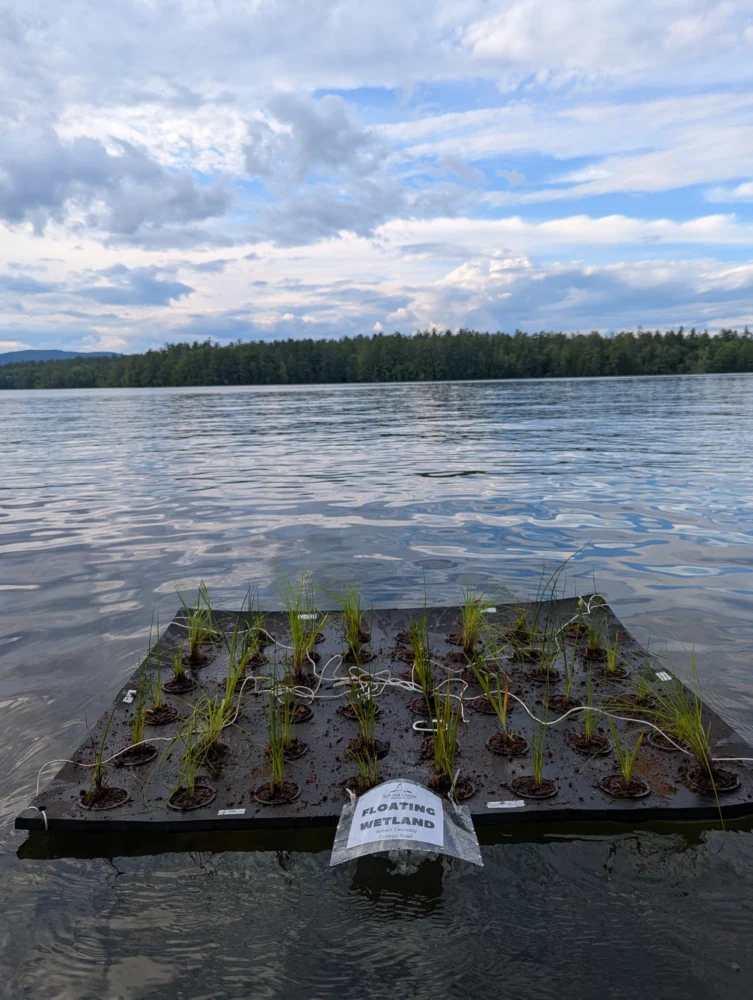 The first was a Build Your Own Floating Wetland Workshop hosted by the Squam Lakes Association. Floating wetlands are platforms containing native plants that float on the water’s surface. The plants’ roots absorb excess nutrients, capture suspended solids, and provide habitat for beneficial microorganisms that help break down pollutants. These systems can help improve water quality, enhance biodiversity, and strengthen shoreline resilience.
I’ll admit that much of my work these days happens behind a computer screen so it felt incredibly rewarding to spend an afternoon getting my hands dirty alongside others who care deeply about protecting our lakes. Together, we repotted native plants, tucked them into floating wetland mats, and discussed the many challenges facing our freshwater ecosystems.
The workshop participants each took home a floating wetland to install for the summer. As I wrestled with how to transport my floating wetland to the lake and figure out the best way to anchor it, I found myself reflecting on the value of small actions.
Will one floating wetland dramatically improve the health of Squam Lake? Probably not.
But what it will do is spark curiosity.
When someone paddles by and asks, “What’s that floating in your cove?” it creates an opportunity to talk about nutrient pollution, water quality, shoreline stewardship, and the many ways individuals can help protect our lakes. Sometimes the most important impact isn’t the action itself but the conversations and awareness it inspires.
A few weeks later, I participated in a true community science effort: the first-ever Squam Lakes Butterfly Count, hosted by the Squam Lakes Natural Science Center.
Participants spent the day surveying monarchs, swallowtails, skippers, and other butterfly species while contributing data to the New Hampshire Butterfly Monitoring Network. The information collected helps scientists and conservation organizations better understand butterfly populations and long-term trends across the state.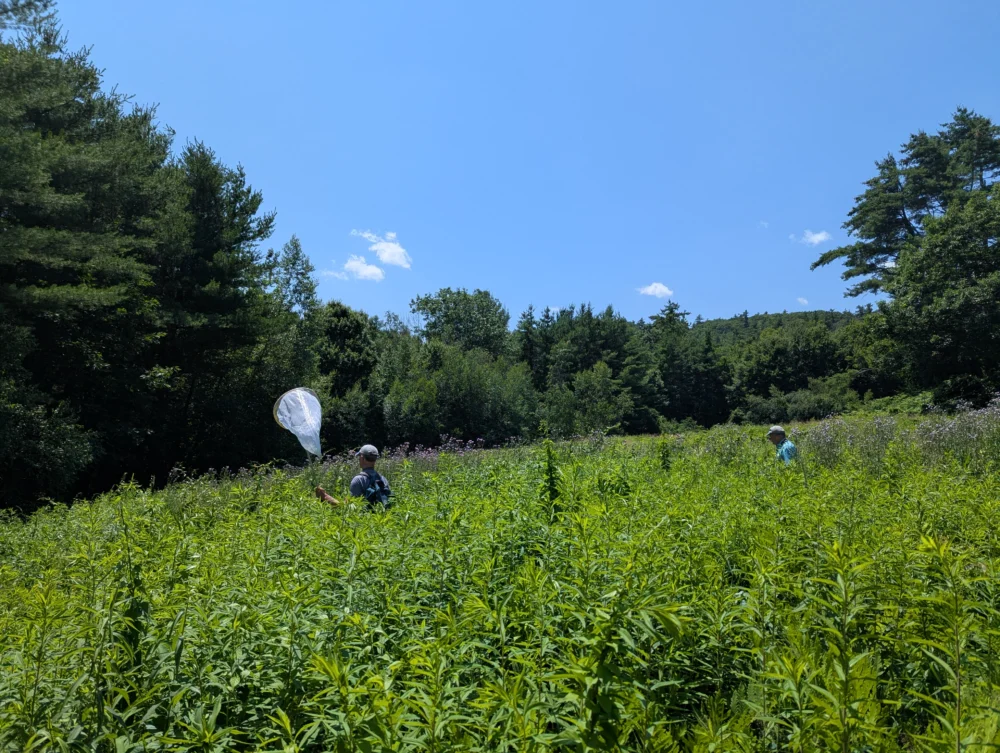
As a complete beginner, I was initially a little intimidated. Fortunately, community science is designed to welcome people of all experience levels. Throughout the day, I learned from knowledgeable volunteers and naturalists, including George DeWolf, coordinator of the Baker Ponds Butterfly Count, New Hampshire’s longest-running butterfly count.
By the end of the day, I could identify far more butterflies than I could that morning, but perhaps more importantly, I had gained a deeper appreciation for the incredible diversity of species living all around us.
What struck me most about both experiences was how they brought people together around a shared purpose. Participants didn’t need advanced degrees or specialized training to make a difference. They simply needed curiosity, a willingness to learn, and a desire to better understand and care for the places they love.
Environmental stewardship and community science are both important pathways to environmental literacy. Stewardship activities invite us to take action to improve the health of our communities and ecosystems. Community science projects help us contribute to scientific knowledge while building our understanding of environmental systems. Together, they help people develop knowledge, skills, confidence, and a deeper sense of responsibility for the natural world.
New Hampshire offers countless opportunities to get involved. Organizations such as the Squam Lakes Association, Squam Lakes Natural Science Center, the New Hampshire Butterfly Monitoring Network, and many others regularly offer opportunities for people of all ages to participate in stewardship projects, community science efforts, volunteer programs, trainings, and environmental events.
Whether you’re planting a floating wetland, monitoring butterflies, collecting water quality data, documenting seasonal changes, tracking wildlife, or helping restore habitat, there are many ways to contribute. These experiences remind us that environmental stewardship isn’t something reserved for scientists or environmental professionals. It belongs to all of us.
NH Environmental Literacy Plan Connections
Goal 1: Expand Access to Environmental Learning Across All Ages and Settings
- Stewardship projects and community science initiatives provide environmental learning opportunities for people of all ages.
- Hands-on experiences connect participants directly with environmental issues and solutions in their communities.
- Informal learning opportunities help build environmental knowledge outside of traditional classroom settings.
Goal 2: Empower Youth and Communities as Environmental Stewards and Changemakers
- Stewardship projects encourage individuals to take action to improve environmental conditions in their communities.
- Community science participants contribute meaningful data that supports conservation and research efforts.
- Both stewardship and community science build confidence, skills, and a sense of responsibility for environmental decision-making.
Goal 4: Strengthen Community Connections to Place Through Environmental Learning
- Participants develop deeper connections to local lakes, forests, wildlife, and natural resources.
- Place-based experiences foster appreciation for New Hampshire’s unique ecosystems.
- Stewardship and community science activities bring people together around a shared commitment to caring for the places they call home.
Interested in getting involved?
A great place to start is Nature Groupie, which features volunteer opportunities, community science projects, trainings, and environmental events happening throughout New Hampshire. You can also explore national community science opportunities through SciStarter, which allows participants to search for projects by topic, location, and level of involvement.
Learn more about the New Hampshire Environmental Literacy Plan and explore ways your organization can support environmental literacy in your community:
New Hampshire Environmental Literacy Plan
Want to join the growing network of organizations supporting environmental literacy in New Hampshire?
We are still accepting letters of support for the NH Environmental Literacy Plan and would love to highlight your organization’s work in a future NH Environmental Literacy in Action feature. To submit a letter of support, share your story, or learn more about getting involved, contact info@nhee.org
Follow and share stories from across the state using #NHELPinAction.
