
Environmental literacy comes alive when students have opportunities to explore the natural world firsthand, learn from environmental professionals, and discover that their actions can make a difference. Fourth-grade students at Christa McAuliffe School (CMS) in Concord recently experienced just that through a yearlong environmental stewardship project supported by the NHEE’d to Get Outside Grant and their Parent Teacher Organization (PTO).
The project brought together a remarkable network of partners, including the Society for the Protection of New Hampshire Forests, New Hampshire Audubon, New Hampshire Fish & Game, UNH Extension, and Wildly Responsible. Together, these organizations helped students explore New Hampshire’s forests, wildlife habitats, vernal pools, and natural resources while learning what it means to be a responsible environmental steward.
For many students, the experience opened doors to outdoor learning opportunities they had never experienced before. Some students had never been hiking, while others had limited access to outdoor recreation and environmental education opportunities. Thanks to grant funding and support from community partners, all students were able to participate in field experiences at New Hampshire Audubon and the Forest Society Conservation Center.
Students spent time hiking trails, observing wildlife, investigating ecosystems, and recording scientific observations in field journals. They learned about native species, habitat protection, adaptations, floodplains, and the interconnected relationships that sustain healthy ecosystems. Teachers noted that even students who are often reluctant to engage in classroom activities became deeply invested in the outdoor learning experiences.
As one student shared, “We loved exploring nature and seeing all the wildlife with our CMS family!”
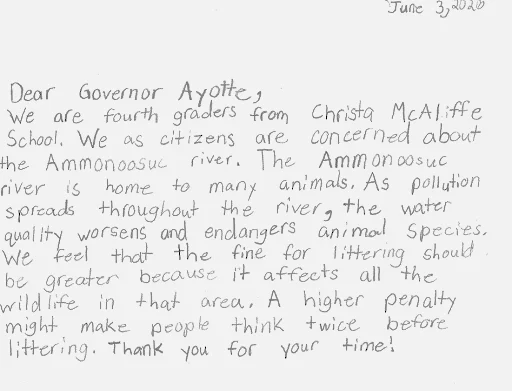
The learning extended far beyond the field trips. Back in the classroom, students combined their field observations with resources from NH Fish & Game and UNH Extension to research New Hampshire species and habitats. They then applied their knowledge through stewardship projects that included written reports, action plans, and persuasive letters to state lawmakers focused on protecting New Hampshire’s natural resources.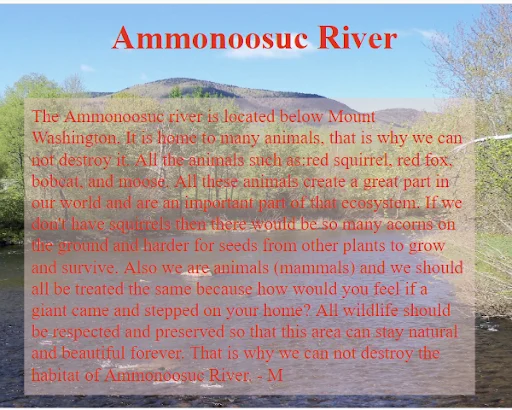
Perhaps most importantly, students began to see themselves as environmental stewards and changemakers. They explored ways to improve wildlife habitat, discussed reducing waste and plastic use, participated in tree-planting efforts, and volunteered to collect environmental data through Concord’s Project SEE and the GLOBE Program. Students even began sharing what they learned with their families, encouraging pollinator gardens and invasive species removal at home.
Reflecting on the experience, one student explained, “It is very important to learn how to be a respectful and caring New Hampshire steward!”
The project also helped students imagine future pathways connected to environmental learning. While working on their stewardship projects, students talked about becoming biologists, conservation officers, and environmental lawyers. Through direct interactions with environmental professionals, they gained a better understanding of the many ways people can contribute to protecting New Hampshire’s natural resources.
This project reflects the vision of the New Hampshire Environmental Literacy Plan by expanding access to environmental learning, empowering youth as environmental stewards, and strengthening connections to New Hampshire’s unique natural places and conservation organizations.
NH Environmental Literacy Plan Connections
Goal 1: Expand Access to Environmental Learning Across All Ages and Settings
- Outdoor learning experiences at New Hampshire Audubon and the Forest Society Conservation Center
- Equitable access to field experiences for students with diverse backgrounds and abilities
- Hands-on investigations of ecosystems, wildlife habitats, and natural resources
Goal 2: Empower Youth and Communities as Environmental Stewards and Changemakers
- Student stewardship projects focused on protecting New Hampshire species and habitats
- Persuasive letters and action plans addressing environmental issues
- Participation in tree planting, environmental monitoring, and community science activities
- Students sharing environmental knowledge and stewardship practices with their families
Goal 4: Strengthen Community Connections to Place Through Environmental Learning
- Exploration of New Hampshire forests, wildlife habitats, and conservation lands
- Partnerships with local environmental organizations and conservation professionals
- Place-based learning that helps students understand and appreciate New Hampshire’s natural resources
Thank you to Christa McAuliffe School and its many community partners for demonstrating what environmental literacy in action looks like through meaningful outdoor learning, environmental stewardship, and community engagement.
Learn more about the New Hampshire Environmental Literacy Plan and explore ways your organization can support environmental literacy in your community:
New Hampshire Environmental Literacy Plan
Want to join the growing network of organizations supporting environmental literacy in New Hampshire?
We are still accepting letters of support for the NH Environmental Literacy Plan and would love to highlight your organization’s work in a future NH Environmental Literacy in Action feature. To submit a letter of support, share your story, or learn more about getting involved, contact info@nhee.org
Follow and share stories from across the state using #NHELPinAction.
