
Field Trip with the Mount Washington Observatory on the Cog Railway | March 8, 2026
Some professional development days just stick with you—and March 8th was one of those days.
A group of educators gathered for the Winter Weather to Tree Line Field Trip with the Mount Washington Observatory, traveling up the slopes of Mount Washington aboard the iconic Mount Washington Cog Railway to explore winter weather science firsthand.
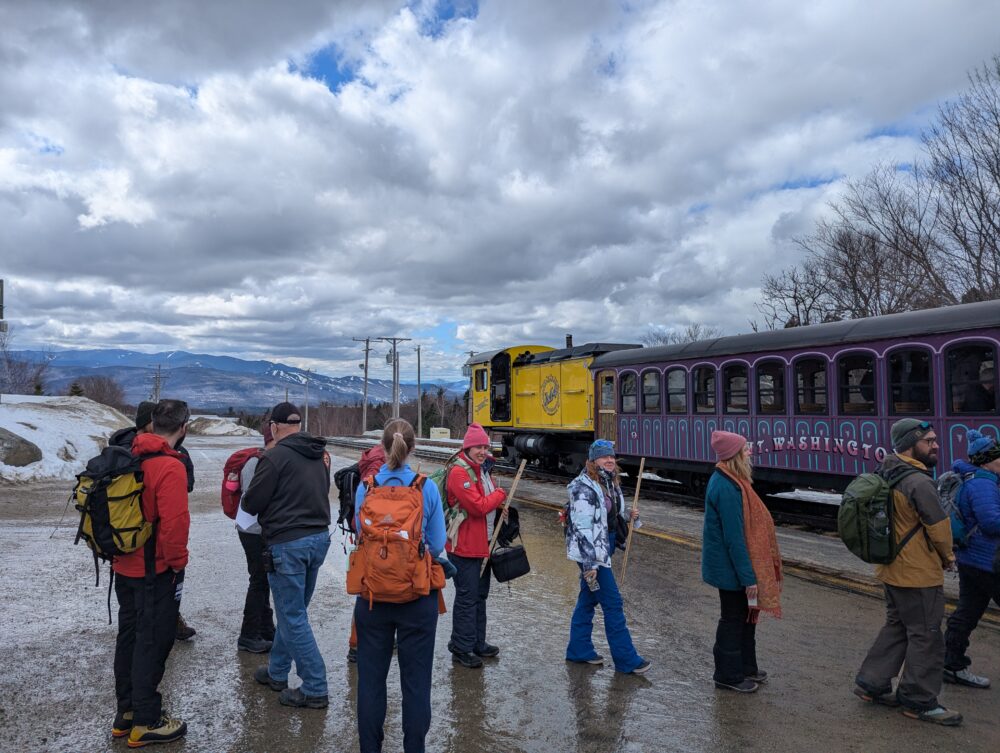
And wow—we could not have asked for more beautiful weather.
As we near the end of winter, the day felt like one of the first hints of spring. Everyone arrived well prepared for the famously extreme conditions Mount Washington can deliver—biting wind, frigid temperatures, and rapidly changing weather. But instead, we were greeted with sunshine, moderate winds, and warm faces turned toward the sky.
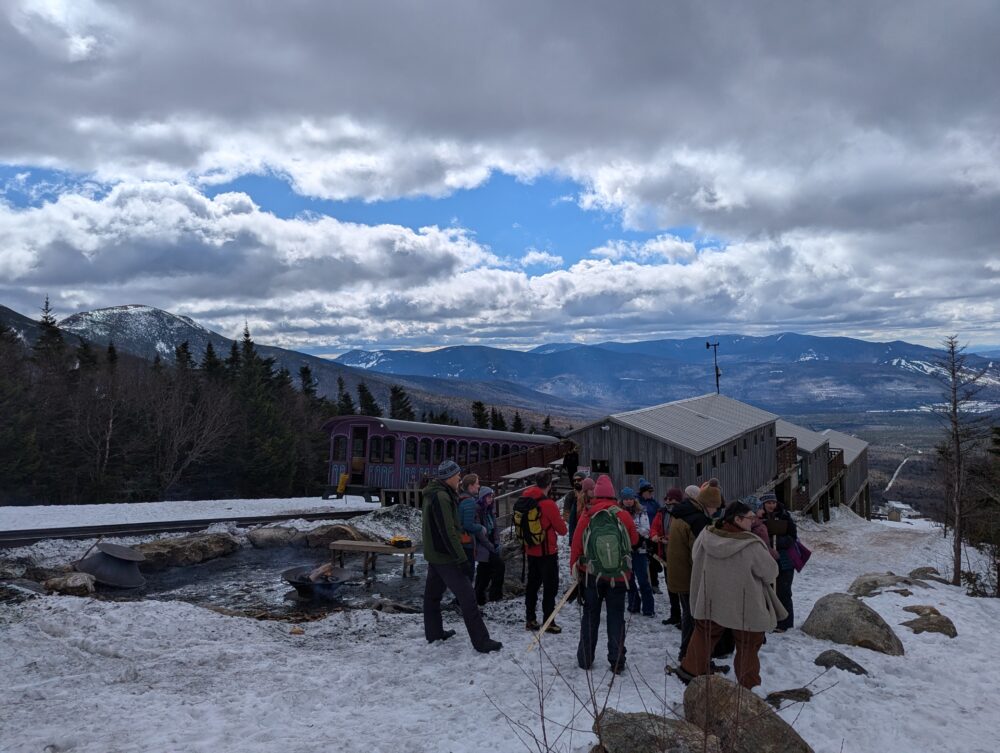
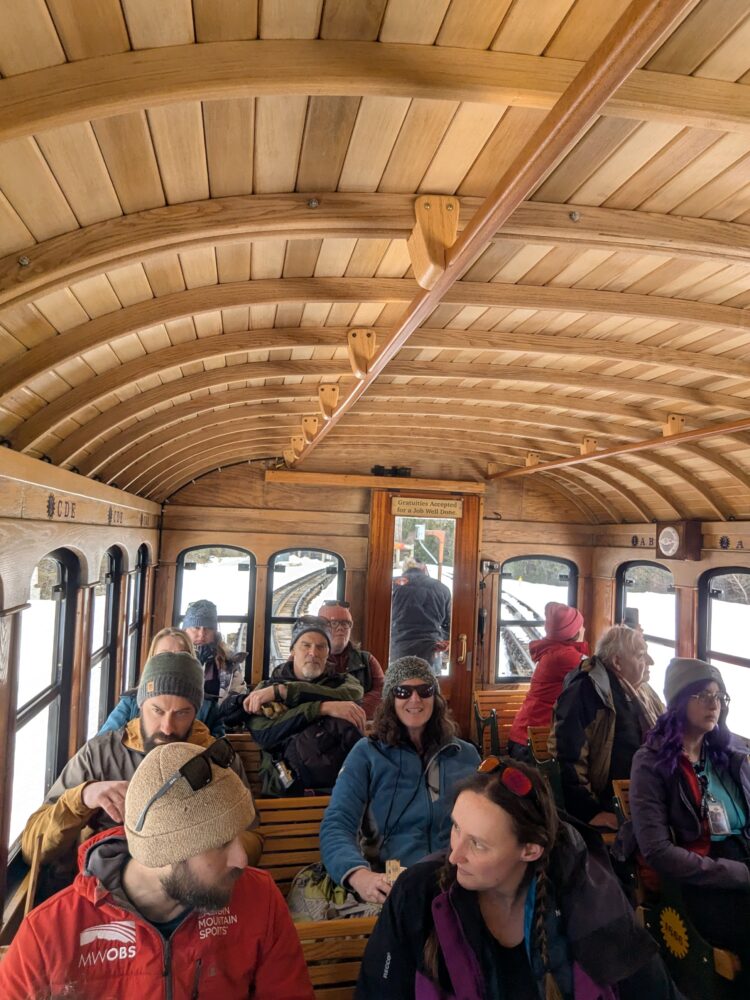
The conditions were perfect for fieldwork—and for curiosity.
Our journey began with a winter ride on the Cog Railway up to Waumbek Station (4,000 feet), just below treeline. Along the way and at our destination, educators collected and compared real-time weather and environmental data from both the Base Station and Waumbek Station, gaining insight into how conditions can change dramatically with elevation.
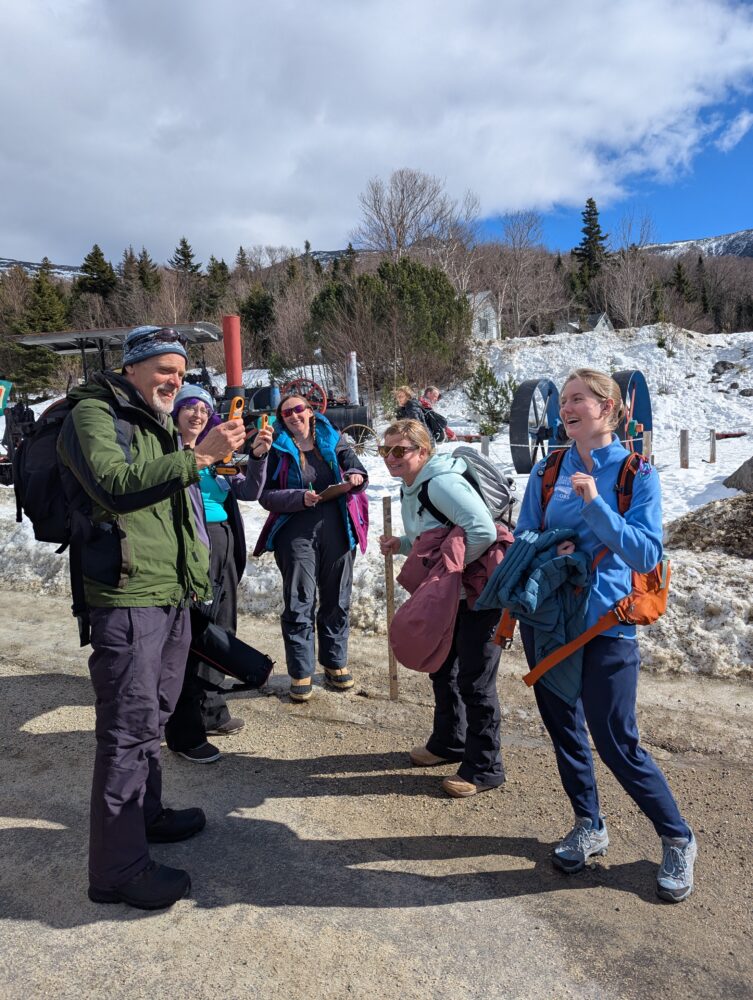 Participants used handheld instruments to measure weather variables, including wind speed with a digital anemometer—a small handheld device with a tiny fan inside that spins as air passes through it to measure wind speed. The light but steady breeze made it fun to watch the little fan whir as we recorded our measurements.
We also measured snow depth and submitted our data to the global community science project Community Snow Observations. This initiative helps scientists track snow conditions around the world, improving understanding of water resources, climate patterns, and changing winter conditions.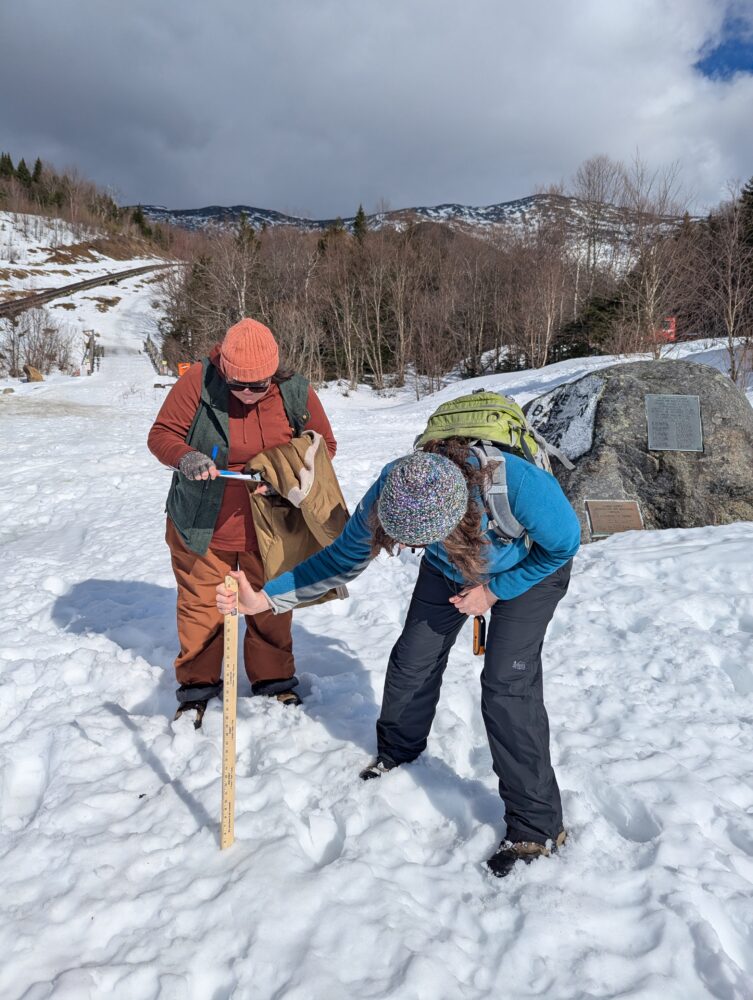
Throughout the day, we learned how scientists at the Mount Washington Observatory study the mountain’s famously extreme winter conditions, while also exploring ways educators can bring citizen science and weather investigations into their own classrooms.
One surprising takeaway from the day was learning how fog can melt snow incredibly quickly. Unlike sunlight, fog can seep into every nook and cranny of the snowpack, accelerating melt in ways many of us had never considered before.
At one point, we were given the option to head inside to review the data we had collected at tree line and at the base of the mountain. But after looking around at the bright sunshine and calm conditions, the decision was unanimous.
We stayed outside.
Sometimes the best classroom is simply standing together in the landscape—observing, measuring, wondering, and sharing discoveries.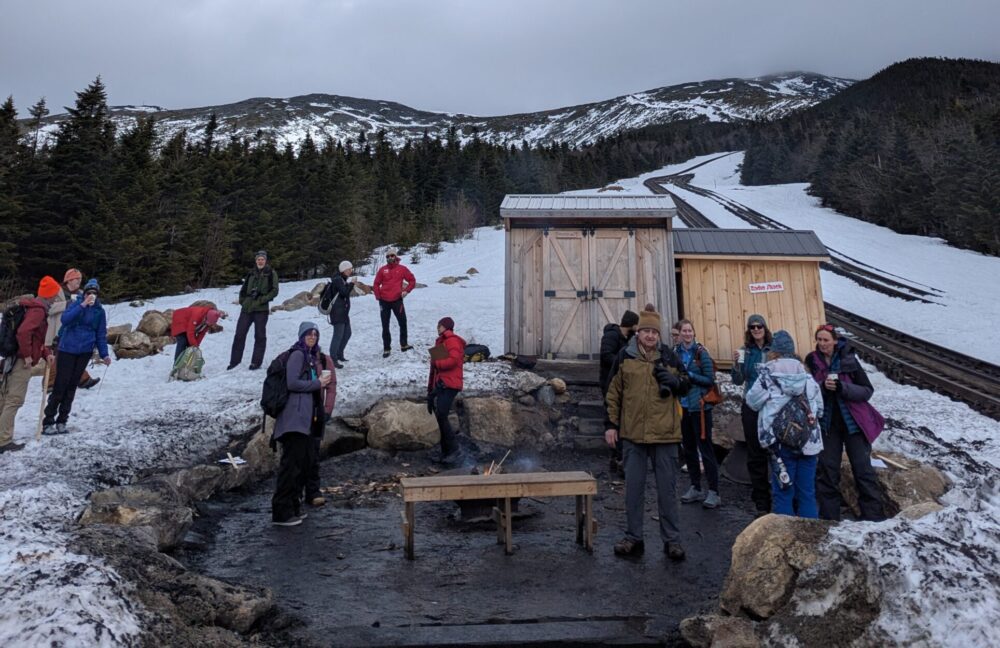
Of course, no winter field experience would be complete without warming up with hot cocoa, enjoyed together in what truly felt like a winter wonderland.
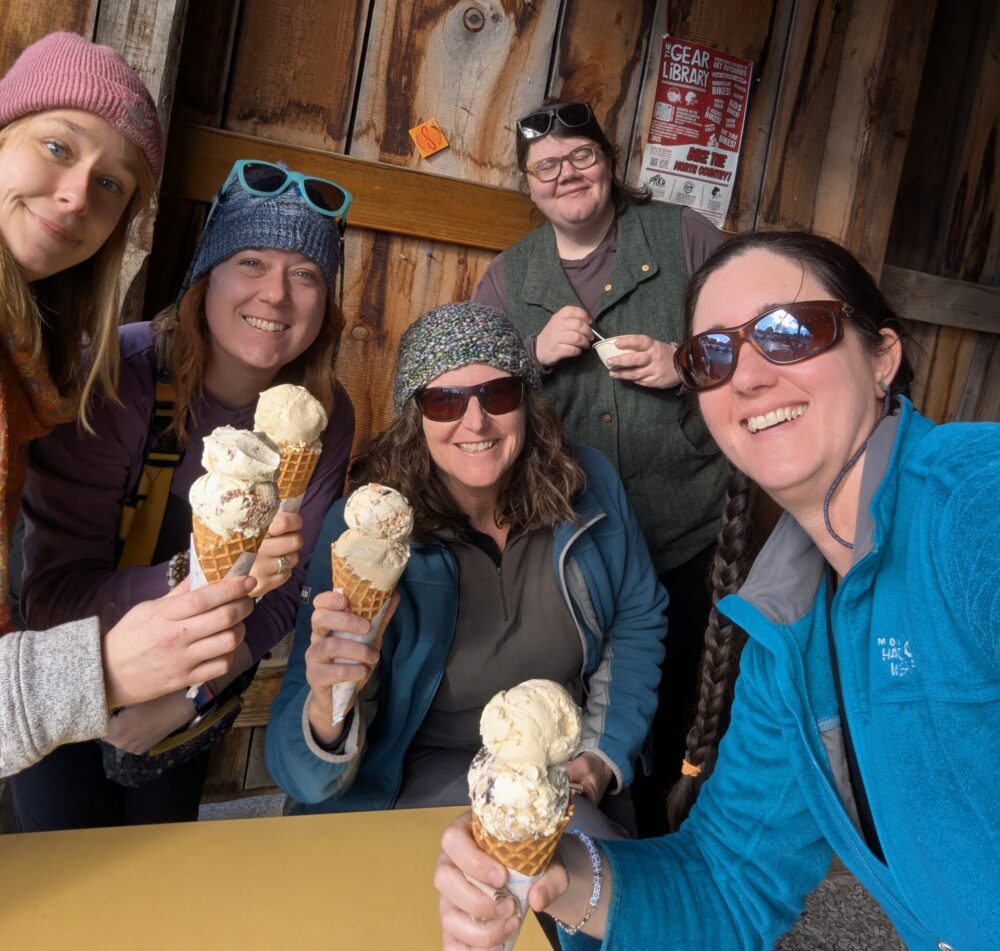
And as if the day couldn’t get any better, the adventure ended with a few participants enjoying some super-secret ice cream on the drive home.
Professional development days don’t get much better than that.
Even after the trip ended, the learning and curiosity continued. Participants were already sharing ideas—from snowpack research to classroom experiments exploring snow ratios. As one participant shared afterward:
“Thank you very much. That was a very special trip that got us thinking.”
Between the sunshine, hands-on science, community science contributions, and time spent learning together in one of New Hampshire’s most iconic landscapes, this field trip was a perfect reminder of why place-based learning matters—and why educators need opportunities to explore, experience, and reconnect with the natural world themselves.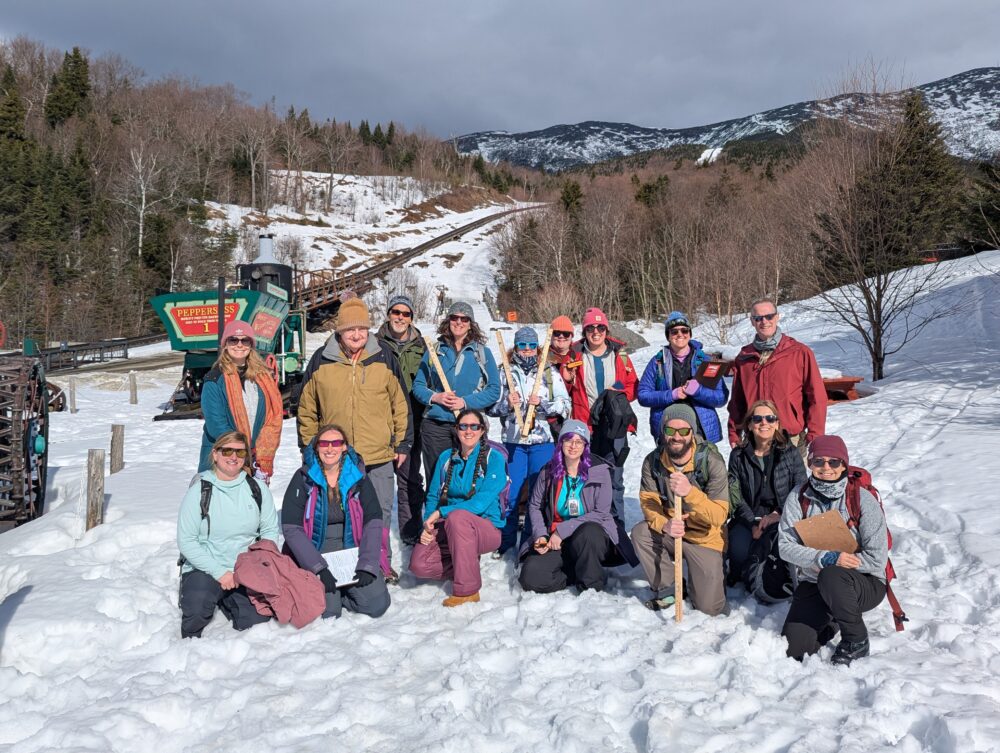
A huge thank you to the incredible education team at the Mount Washington Observatory and the crew at the Mount Washington Cog Railway for collaborating with New Hampshire Environmental Educators (NHEE) to make this professional learning experience possible. Opportunities like this—where educators can engage directly with scientists, gather real-world data, and experience the mountain environment together—are invaluable.
Interested in learning more?
👉 Learn about educational programs at the Mount Washington Observatory: https://mountwashington.org
👉 Explore the historic Mount Washington Cog Railway: https://www.thecog.com
And if you’d like to contribute snow measurements to global research, you can learn more or submit observations through Community Snow Observations here:
https://communitysnowobs.org/
